Dark social and zero click are killing your website. But that’s fine.
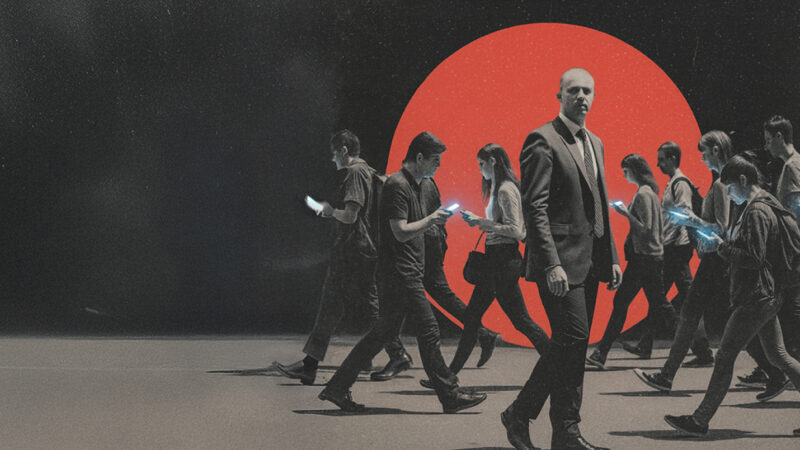
Remember when your main goal as a marketer was to drive traffic to your site? Get your audience on the homepage or a landing page, give ’em the old razzle-dazzle, and then – fingers crossed – they head to the contact form.
Things are a bit more complicated now. Your audience no longer follows predictable paths to purchase. They weave, skip ahead, double back on themselves, vanish and reappear. They may not even visit your site. They are tricky.
Dark social and zero click are driving that trickiness.
What are dark social and zero click?
Already know what zero click and dark social are? You can skip ahead to the next section. Otherwise, here’s your quickie primer.
Zero click is what happens when your prospect gets an answer they’re looking for without leaving the platform they searched on – e.g. via a Google AI Overview, a LinkedIn carousel, or a ChatGPT response.
Because they now have all the info they need, the prospect doesn’t continue onwards. They don’t need to click anywhere else – hence ‘zero click’ – so they won’t be heading to your site.
Dark social, meanwhile, is anything that happens with your brand in private spaces you can’t track – e.g. a blog shared and discussed in Slack, screenshots dropped into a Teams thread, or someone name-checking your brand in an email.
Sometimes there’s a link. Sometimes it’s just a mention or screenshot that sparks a later search. Either way, you’ll never see it in your analytics.
Why should you care about these two phenomena? Because customer journeys are changing, and a lot of B2B brands are still playing the game by rules that no longer apply.
According to Cognism, 77.5% of B2B buyers are heavily influenced by links shared through the untrackable black hole of dark social channels. (Relatedly, research by Gartner shows that 61% of B2B buyers don’t want to be contacted by sales reps, and would far sooner self-serve.)
Zero click, meanwhile, is devouring web traffic: a study by SparkToto and Datos found that 58.5% of Google searches now end immediately, on the first results page, where AI Overview answers the majority of queries.
Those numbers are already startling, and they’re only going to continue travelling in one direction. Now’s the time to make some smart adjustments to your marketing.

How can your brand adapt to dark social?
Firstly, don’t think of dark social as something secretive or sinister. Despite its unsettling name, it’s nothing like the dark web. It’s just people behaving like people.
Your buyers hold conversations in places where your analytics can’t go: Teams chats, WhatsApp groups, LinkedIn DMs, phone calls, and other one-to-one or one-to-few channels. These conversations are hidden from your view. But they’re where trust is built, opinions are shaped, and paths to purchase quietly begin.
The trick is to accept that you’ll never see everything. So instead of chasing total visibility, focus on A) being worth talking about, and B) being easy to talk about.
(This is, of course, how all marketing was required to work, pre-internet!)
Start by focusing on content that’s effortless to share and remember. Most dark-social interactions don’t involve a link click at all. They’re a screenshot, a cut-and-pasted quote, or a quick “have you seen this?” that sparks a later search. So make sure every asset works out of context. One idea per post. A clear headline. Big, mobile-friendly fonts. A stat or takeaway that lands without requiring additional explanation.
If you’re producing reports or thought leadership, give people small, snackable artefacts to pass around: charts, slides, quote cards, one-minute video clips. These travel much further in private chats than your 40-page PDF ever will.
It also helps to make sharing your content easy with ‘official’ tools. Add email and WhatsApp share buttons. Use trackable shortlinks when you post content into communities yourself (on Reddit, for example). You won’t catch every share, but you’ll start to see a few fuzzy outlines of your audience.
And remember: not every metric lives in Google Analytics. Look for ‘proxy signals’ such as:
- Spikes in direct traffic to URLs that nobody would ever type out manually
- Branded search increasing after a big campaign
- Prospects mentioning “someone shared something from you” on enquiry forms
All of that is dark social doing its work. It’s messy, unmeasurable and utterly human. Your inner statistician will just have to learn to live with it.
You just need to design for it, and make sure the next time your name comes up in a private chat, there’s something genuinely useful and compelling for people to share.

How can your B2B brand adapt to zero click?
Zero click isn’t the enemy. It’s just proof that your audience prioritises its own convenience over following your carefully planned funnel. They’re getting everything they need straight from Google, LinkedIn, or whatever platform they happen to be on. If you’re smart, that can still work in your favour.
Start by flipping your success metrics. A high click-through rate isn’t the goal; visibility and recall are. You’re winning if people see, understand and remember your message, right where they find it – even if they never go anywhere near your site.
The practical side of that starts with structure.
On the search side of things, create pages that fully answer common questions via compact, definitive responses. That means clear headings, scannable bullets and a straightforward “so what?”.
Doing this serves two purposes. Firstly, it helps Google and other search engines surface your content directly to users (through, for example, Google’s AI Overview, or People Also Asl). This greatly boosts your visibility, even if those users never click through to your site.
Secondly, it makes your content easier for LLMs such as ChatGPT, Claude and Perplexity to interpret and reference accurately. These models rely on structured, neatly formatted text to extract concise answers. The clearer and cleaner your content is, the more likely it’ll feed into AI-generated responses that mention or paraphrase your work.
Just don’t expect to get clicks from these LLM mentions: site traffic from ChatGPT dropped by 52% in just one month (August 2025), and that downward trend is highly likely to continue.
Okay – moving on to social. It’s time to stop leading with links. Instead, design carousels, infographics, polls and short videos that deliver done-in-one value without a CTA-ed redirect. You can almost always fit ‘claim > proof > action’ into a single LinkedIn carousel.
If you do this right, you’ll notice that your engagement goes up, but your site traffic might dip. That’s fine. Hold your nerve! As research by Bain & Company shows, zero-click results have reduced organic web traffic by 15 to 25% – not because interest in brands has fallen, but because answers live on a relatively tiny number of platforms now.
It’s also worth using schema markup and best-practice metadata so your answers appear cleanly in AI Overviews or knowledge panels. These search features are the new front doors to your expertise.
Finally, don’t fight the format. Very few people dutifully read from the top of a long post to the bottom. They scroll, skim and skip, so meet them where they are.
Write shorter sentences. Front-load the insight. Make every image legible on a phone – particularly infographics. Stop thinking of your content as a doorway to a landing page. Think of it as an incredibly satisfying snack.
If zero click means your audience never leaves LinkedIn, that’s fine. Aim to create the post they stop scrolling for. If they never move beyond Google’s results page, that’s fine. Be the snippet they remember.
You’ll still earn the attention – you just won’t see it in your traffic. But you will clock it in next quarter’s sales.
Need a hand creating B2B content? We’re here to help you stand out in a sea of middling marketing. So let’s talk.

A newsletter actually worth reading
We dislike spam as much as you do. So we promise to only grace your inbox when we’ve got something valuable to say.