How to create relevant, engaging B2B messaging.

Creating stand-out messaging for your brand
Making sure your messaging remains both faithful to your brand and relevant to your audience can be a tricky balancing act in B2B. While crystalling messaging basics like values and positioning are a solid start, they aren’t always enough – it can quickly start to feel like you’re trying to force a standardised message onto multiple different segments that need a more nuanced, personalised approach. That can mean your comms start to feel cliched, or at the other extreme like you’re playing messaging bingo with little cohesion between iterations.
It’s a particularly challenging area in B2B as you’re likely to be promoting the same products to different people at various stages of the purchase journey. For example, influencing specifiers such as engineers or architects early in projects, then technical specialist such as installers later down the line.

Whilst your core brand values should be broadly relevant to both customer types, how you communicate both these and your associated product or service benefits will need to differ if you want them to be most effective. The challenge then is how to do this so that you still build a consistent, positive perception with each.
Without that joined up thinking, the net result is that customer understanding of how your brand is relevant to their job, and therefore how effective the brand can be in winning their business, is reduced. Campaigns come and go and the chance to keep reiterating and reinforcing exactly what makes you special is lost. The further off base and diverse your messaging, the greater the risk of undermining trust – why wouldn’t folk feel disengaged if you’re behaving differently from one campaign to the next?
Balancing cohesion with relevancy
What’s needed is a centre of gravity for all brand messaging that goes beyond just top level positioning – balancing core brand values with the flexibility to work well across differing customer requirements. You may well have the finest customer support in the industry, but that’s going to mean different things to Karen the architect than it is to Barry the engineer.
Developing a messaging matrix that strikes the right balance between detail and actually being useful in practice can help to provide the structure this needs. In some cases, that might mean looking first at how you can group different types of customers and purchase influencers based on common ground in what they’re after and what you’re looking to sell. This helps when you’re starting with double digit numbers of customer types or personas – otherwise you’re going to end up with a bewildering array of messages that no-one will be able to turn into a cohesive series of campaigns.

With those pared to an efficient number, mapping them out across a matrix helps to lay down what each group’s messaging will be anchored in. This should be a process of taking your top level position and refracting it through the priority needs of each group to maintain relevance.
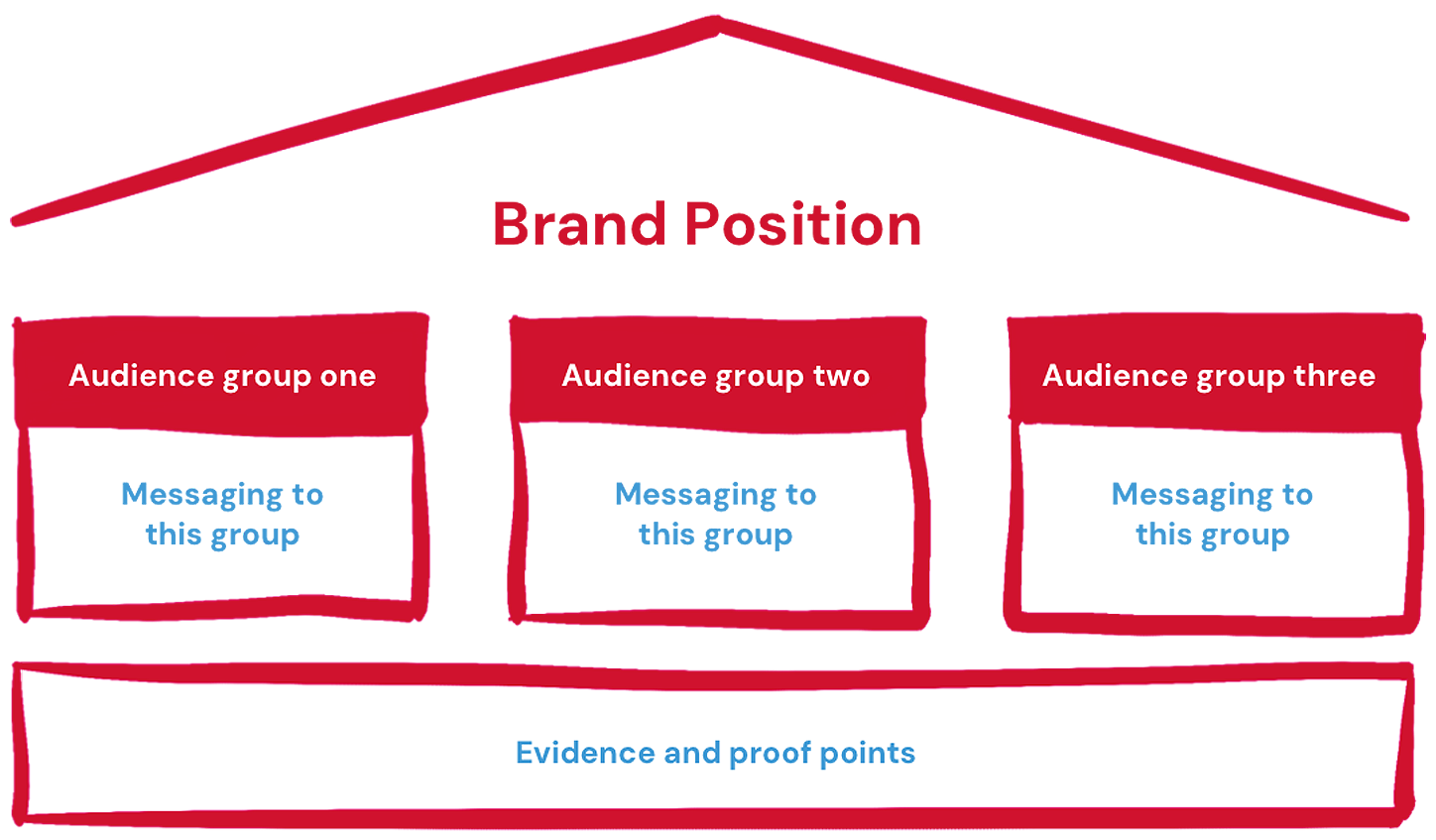
Strike the right balance and this structure will help bring cohesion to your comms, without compromising on the need to adapt messaging for different groups to make sure you remain relevant and engaging.

A newsletter actually worth reading
We dislike spam as much as you do. So we promise to only grace your inbox when we’ve got something valuable to say.